
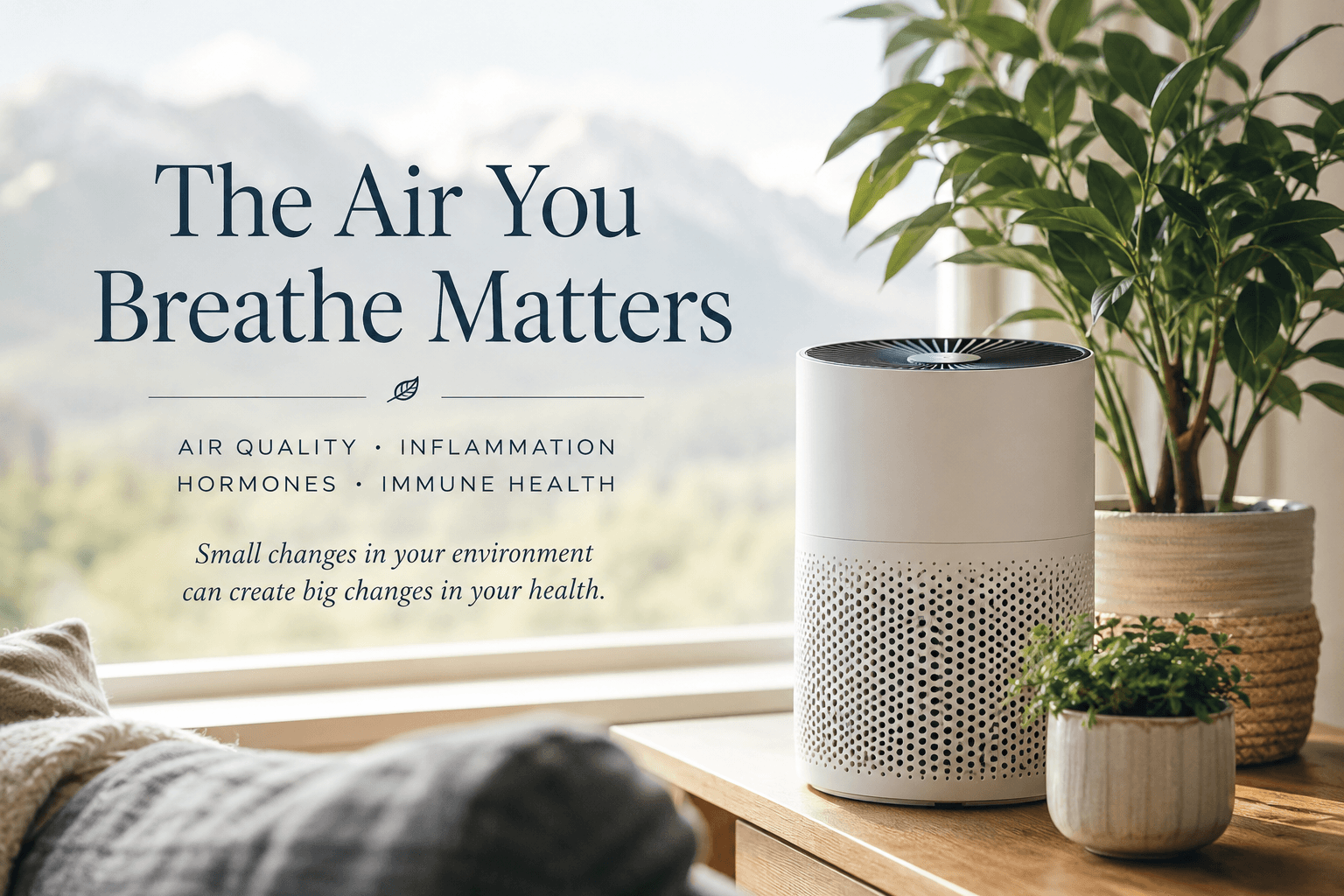
Air Quality, Inflammation, and the Missing Piece Many People Overlook
 Kelsey Asplin, ND
in brain health, Cancer, immune health, mens health, sexual health, sleep health, thyroid health, womens health
June 3, 2026
Kelsey Asplin, ND
in brain health, Cancer, immune health, mens health, sexual health, sleep health, thyroid health, womens health
June 3, 2026
What If Inflammation Isn’t Just Coming From Food?
One of the most common conversations I have with patients starts with some version of the same frustration:
“I’ve cleaned up my diet.”
“I’m exercising regularly.”
“I’m taking the supplements.”
“So why do I still feel inflamed?”
It’s a fair question.
Most of us have been taught to think about inflammation primarily through the lens of nutrition. We hear about inflammatory foods, anti-inflammatory diets, blood sugar balance, gut health, and food sensitivities. All of those things matter, and they absolutely deserve attention. But what I’ve found over the years is that sometimes people become so focused on what they’re putting into their body that they overlook what their body is being exposed to every single day.
The reality is that your immune system doesn’t only respond to food. It responds to everything in your environment.
The air you breathe.
The water you drink.
The products you use on your skin.
The building you live in.
The office you work in.
Even the dust circulating through your HVAC system.
All of these factors provide information to the body. Your immune system is constantly assessing those inputs and determining whether they are safe, neutral, or potentially threatening. When that system is functioning well, we adapt remarkably well to our environment. But when exposures become chronic or excessive, the body may remain in a state of low-grade inflammatory activation that can contribute to symptoms far beyond the lungs.
This is one of the reasons environmental medicine has become such an important part of how I think about health.
The Air You Breathe Becomes Part of Your Biology
One of my favorite ways to explain environmental health is this:
The air you breathe doesn’t stay outside of you.
Every day, we inhale thousands of gallons of air. Along with oxygen, that air may contain pollen, particulate matter, microbial fragments, volatile organic compounds, mold spores, combustion byproducts, and countless other substances. Most of the time, our bodies handle these exposures beautifully. We have sophisticated detoxification systems, antioxidant defenses, immune cells, and physical barriers designed to protect us.
The challenge isn’t that exposure exists. Exposure is part of being alive.
The challenge occurs when the cumulative burden becomes greater than the body’s ability to adapt.
When that happens, symptoms often begin showing up in ways that don’t immediately look environmental.
A person may experience more fatigue than usual. Their sleep becomes lighter and less restorative. They feel mentally foggy. Their headaches become more frequent. They notice worsening seasonal allergies or increased sensitivity to fragrances and chemicals. Some people find that autoimmune symptoms become more difficult to control, while others simply describe feeling “off” without being able to pinpoint exactly why.
Because these symptoms can be vague and nonspecific, environmental contributors are often overlooked. Instead, people continue searching for the perfect supplement, the perfect diet, or the perfect lab test while the body continues responding to an ongoing exposure.
Why This Matters in Colorado
Living in Colorado comes with many advantages. We have access to incredible outdoor recreation, abundant sunshine, and a culture that tends to prioritize health and wellness. It’s one of the reasons many of us choose to live here.
At the same time, Colorado presents some unique environmental challenges that deserve attention.
Wildfire smoke has become an increasingly common reality across the western United States. Even when fires are burning hundreds of miles away, smoke can travel long distances and significantly affect air quality throughout the Front Range. Most people notice the obvious signs first: hazy skies, the smell of smoke, or irritation in the eyes and throat.
What many people don’t realize is that air quality can affect health even when the impact isn’t immediately visible.
During periods of poor air quality, I often hear patients report that they feel more tired, more inflamed, more anxious, or less mentally sharp. Sometimes they don’t connect those changes to the environment at all. They assume they’re stressed, not sleeping well, or simply having a bad week.
Increasingly, research suggests there may be more to the story.
What Is PM2.5 and Why Are Researchers Concerned About It?
When scientists discuss air quality, one of the primary measurements they focus on is something called PM2.5.
PM2.5 refers to particulate matter measuring less than 2.5 microns in diameter. To put that into perspective, a human hair is roughly 70 microns wide. These particles are incredibly small, which is exactly what makes them concerning.
Because of their size, PM2.5 particles can bypass many of the body’s normal filtration mechanisms. Rather than becoming trapped in the nose or upper respiratory tract, they travel deep into lung tissue where they can interact directly with delicate respiratory surfaces. Research suggests that some of these particles may even cross into circulation, allowing them to influence tissues well beyond the lungs.¹
This is where the conversation becomes particularly interesting.
Historically, air pollution was viewed primarily as a respiratory issue. Today, we know that particulate exposure can influence multiple systems throughout the body. Researchers have linked PM2.5 exposure to cardiovascular disease, insulin resistance, immune dysregulation, neuroinflammation, and increased all-cause mortality.²⁻⁵
In other words, air quality isn’t just a lung issue. It’s a whole-body issue.
And for individuals already dealing with hormone imbalances, autoimmune disease, chronic fatigue, metabolic dysfunction, mold exposure, or persistent inflammation, it may represent an important piece of the puzzle.
The Symptoms Don’t Always Look Environmental
One of the things I find most fascinating about environmental medicine is how often it hides in plain sight.
When people think about environmental exposure, they tend to imagine obvious respiratory symptoms such as coughing, wheezing, or shortness of breath. While those symptoms certainly occur, many of the patients I see experience something much less obvious.
They tell me they can’t think clearly. They feel exhausted despite getting enough sleep. Their motivation disappears. Their headaches return. Their body feels more reactive than usual. Their hormones feel harder to balance. And often, these symptoms seem disconnected until we step back and look at the bigger picture.
Environmental exposures don’t always create disease on their own. More often, they add to the body’s overall burden. They become one more factor that the immune system, detoxification pathways, nervous system, and endocrine system have to manage.
Sometimes that extra burden is enough to push someone from feeling resilient to feeling overwhelmed. And that’s why paying attention to our environment matters.
The Connection Between Air Quality and Hormone Health
One of the things that surprises many patients is how often environmental health overlaps with hormone health.
Over the last two months, we’ve spent a lot of time talking about hormones, inflammation, detoxification, and the factors that influence how we feel day to day. While those topics may seem separate from air quality at first glance, they’re actually closely connected.
When the body is exposed to pollutants, particulate matter, and other environmental stressors, it responds by activating immune pathways and increasing antioxidant demand. This can create additional pressure on systems that are already working hard to maintain balance.
Hormones don’t exist in isolation. They are part of a larger network that includes the immune system, nervous system, liver, gut, and detoxification pathways. When one area becomes stressed, other areas often feel the effects.
This is one reason we frequently see environmental exposures complicating conditions such as:
- perimenopause
- PMS
- thyroid dysfunction
- chronic fatigue
- insulin resistance
- autoimmune disease
I’m not suggesting that poor air quality causes all of these conditions. But I am suggesting that it may contribute to the overall burden the body is trying to manage.
Think about it this way. If someone is already dealing with chronic stress, disrupted sleep, blood sugar instability, and hormone fluctuations, their system may have less capacity to adapt when wildfire smoke rolls into town or when hidden environmental exposures are present in the home.
Often, it isn’t one thing that pushes someone over the edge. It’s the accumulation of many small things.
Why Indoor Air May Matter Even More Than Outdoor Air
When people think about environmental exposures, they tend to focus on what’s happening outside.
- Wildfire smoke.
- Traffic pollution.
- Industrial emissions.
Those certainly matter. But what many people don’t realize is that we spend the vast majority of our lives indoors. Depending on the source, most Americans spend roughly 90% of their time inside homes, offices, schools, vehicles, and other buildings.⁶ That means the quality of our indoor environment may have an even greater impact on our health than what’s happening outdoors.
The challenge is that indoor air often contains a surprising number of contributors.
- Synthetic fragrances from candles, plug-ins, and air fresheners.
- Volatile organic compounds released from furniture, flooring, paints, and building materials.
- Cooking fumes.
- Cleaning products.
- Dust.
- Pet dander.
- Mold fragments.
- Outdoor smoke that infiltrates the home.
Many modern homes are designed to be highly energy efficient, which is wonderful for reducing utility costs. The downside is that tightly sealed buildings often have less fresh air exchange. Pollutants that enter the home may linger longer than they otherwise would.
This doesn’t mean we should become fearful of our homes. Far from it. But it does mean that paying attention to indoor air quality may offer an opportunity to improve health that many people overlook.
The Colorado Mold Myth
There is another environmental misconception I encounter frequently in Colorado.
People assume mold isn’t a significant issue because we live in a dry climate. I understand why. When most people think about mold, they picture humid regions with constant moisture and tropical weather. Colorado doesn’t fit that image.
Yet mold remains surprisingly common. The reality is that mold doesn’t require a humid climate. It requires moisture.
- A roof leak.
- A plumbing leak.
- Poorly installed flashing.
- Condensation.
- HVAC issues.
- Improper drainage.
- A water-damaged crawlspace.
Any of these situations can create an environment where mold thrives.
And because mold often grows behind walls, beneath flooring, inside crawlspaces, or within HVAC systems, many people don’t realize it exists until symptoms begin appearing.
Over the years, I’ve worked with many patients who spent months or years trying to solve health problems before eventually discovering a significant environmental contributor hiding inside their home.
This is one reason environmental medicine requires curiosity. Sometimes the answer isn’t found in the next supplement. Sometimes it’s found behind the drywall.
What We See in Clinical Practice
At Denver Naturopathic Clinic, environmental health has become an increasingly important part of the conversation. Not because every patient has a mold problem. Not because every patient needs extensive environmental testing. And certainly not because every symptom can be blamed on the environment. Rather, we’ve learned that environmental exposures often represent a missing piece of the puzzle.
Many patients arrive after spending years focusing on nutrition, exercise, stress management, and supplementation. Those interventions are important and frequently beneficial. Yet sometimes progress stalls.
That’s often when we begin asking different questions.
What is the quality of the air you’re breathing every day? Has your home ever experienced water damage? How do you feel when you’re away from your environment? Do your symptoms fluctuate seasonally? Are there patterns you’ve never considered before?
The answers don’t always reveal an environmental issue. But when they do, it can be transformative. One of the most rewarding moments in practice is watching someone finally understand why they haven’t felt like themselves. Not because we’ve found a magic supplement. But because we’ve identified a burden their body has been carrying all along.
Practical Ways to Improve Air Quality and Reduce Environmental Burden
The good news is that improving environmental health does not require perfection. In fact, I generally encourage patients to avoid the temptation to overhaul everything at once. Environmental medicine can become overwhelming very quickly if we approach it with an all-or-nothing mindset. Instead, I encourage people to focus on progress.
For most households, a few thoughtful changes can significantly improve environmental quality.
- High-quality HEPA filtration is one of the most impactful places to start. Effective filtration can reduce particulate matter, allergens, dust, and other airborne contaminants. This becomes particularly important during wildfire season when outdoor air quality deteriorates.
- Reducing synthetic fragrances is another simple intervention that often produces meaningful benefits. Candles, air fresheners, scented laundry products, perfumes, and heavily fragranced personal care products can contribute volatile organic compounds and irritants to indoor air.
- Maintaining HVAC systems, changing filters regularly, and addressing water intrusion promptly can also have a surprisingly large impact over time.
Most importantly, remember that environmental health is not about creating a perfectly clean environment. It is about reducing unnecessary burden wherever possible.
Final Thoughts
One of the reasons I wanted to start our Environmental Health month with air quality is because it serves as a powerful reminder that health extends far beyond food and supplements.
We often spend so much time focusing on what we’re putting into our bodies that we forget to consider what our bodies are interacting with every day. The air we breathe. The spaces we live in. The environments where we work, sleep, and spend time with our families. These factors influence our health whether we’re paying attention to them or not.
The encouraging news is that awareness creates opportunity. Once we begin understanding how environmental exposures affect inflammation, immune function, hormone balance, sleep, cognition, and overall well-being, we can start making informed decisions that support health rather than undermine it.
This month we’ll continue exploring these topics as we take a deeper dive into wildfire smoke, mold exposure, home strategies, and practical ways to create healthier environments. Because sometimes the missing piece isn’t another supplement.
Sometimes it’s the environment surrounding us every single day.
References
¹ Brook RD, Rajagopalan S, Pope CA III, et al. Particulate matter air pollution and cardiovascular disease. Circulation. 2010.
² Thurston GD, Ahn J, Cromar KR, et al. Ambient particulate matter air pollution exposure and mortality. Circulation. 2016.
³ Manisalidis I, Stavropoulou E, Stavropoulos A, Bezirtzoglou E. Environmental and health impacts of air pollution. Frontiers in Public Health. 2020.
⁴ Schraufnagel DE, Balmes JR, Cowl CT, et al. Air pollution and noncommunicable diseases. Chest. 2019.
⁵ Brook RD, Rajagopalan S, Pope CA III, et al. Particulate matter air pollution and cardiovascular disease. Circulation. 2010.
⁶ United States Environmental Protection Agency. Indoor Air Quality Resources.
⁷ World Health Organization. WHO Global Air Quality Guidelines. 2021.
⁸ National Institute of Environmental Health Sciences. Air Pollution and Your Health.